Donation Amount. Min £2

Health

Students get their temperature measured before class at Lycee Notre dame de Citeaux school in Kigali, Rwanda, on November 2, 2020. Photo SIMON WOHLFAHRT/AFP


Rwanda has imposed a partial lockdown to curb the surging cases of Covid-19.

A statement released by the Prime Minister’s office on Tuesday orders the closure of schools and universities and prohibits church services, meetings and all social gatherings, effective July 1.

The 7pm-4am curfew was revised and the curfew will now run from 6pm to 4am.

Movements between Kigali and other districts have been banned except for essential services, while business have been asked to close by 5pm. Restaurants will only offer takeaway services.

Kigali City and districts of Burera, Kamonyi, Gicumbi, Rwamagana, Rubavu, Nyagatare, Rutsiro and Musanze that have recorded more cases of infections will follow stricter guidelines than the rest of the country. Most of the above districts neighbour the Democratic Republic of Congo and Uganda that are experiencing a spike in infections. 

The new guidelines come just a week after the cabinet meeting had tightened guidelines. 

“Given the surge in Covid-19 cases, and the emergence of new variants globally, the government has decided to take additional measures to control the further spread of the virus,” the statement read in part. 

Rwanda has been experiencing a severe surge in Covid-19 infections since early May where daily records and deaths increased over four times. 

The Ministry of Health said that more young people are getting infected and dying from the virus, and more patients are symptomatic. 

The spike is attributed to complacency in adhering to preventive measures by the public and the wave of infections in neighbouring Uganda and DR Congo. 

“We need the public to collaborate and adhere to these measures to see results. These measures were tightened to sustain what we have achieved so far. The previous measures have worked and we need to collaborate on this as well,” Prime Minister Edouard Ngirente said. 

As of Monday, Rwanda recorded 757 new infections and its positivity rate stands at 11 percent. 

So far, Rwanda has vaccinated 391,739 people. It targets to vaccinate 60 percent of its 12 million population by July 2022. - Ange Iliza, The EastAfrican


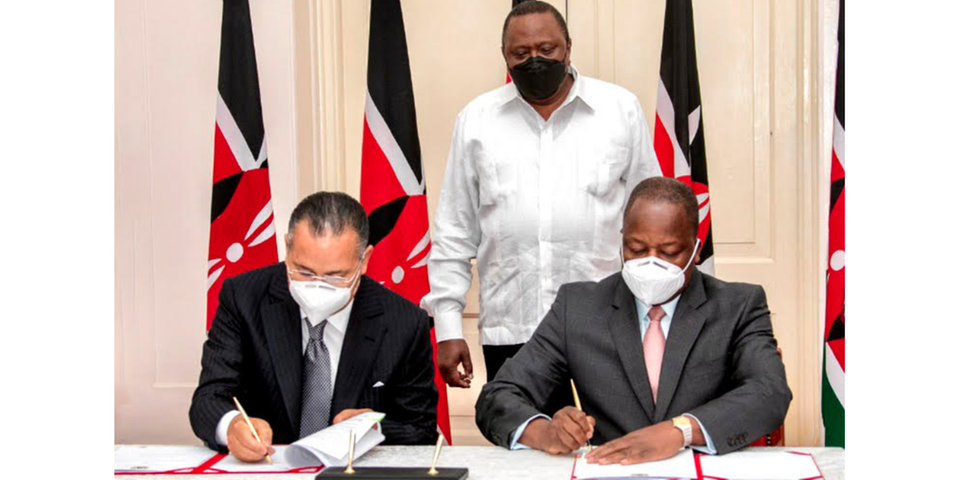
Kenya has secured $130 million in funding from the World Bank to buy COVID-19 vaccines and help boost the country’s vaccination drive, the Bank announced on Tuesday.

The funding comes as the Kenyan government starts to administer the second dose of AstraZeneca vaccines to citizens, amid an upsurge of infections across 13 counties in the western region of the country.

As of Monday, the East African country had recorded 182, 883 COVID-19 infections and 3, 612 deaths.

World Bank Country Director for Kenya, Keith Hansen, said the “upfront financing for the acquisition of COVID-19 vaccines will enable the government to expand access to more Kenyans free of cost”.

It will enable the country to procure more vaccines via the African Vaccine Acquisition Task Team (AVATT) initiative and COVAX, the global vaccine-sharing facility.

“This additional financing comes at a critical time when the Government of Kenya is making concerted efforts to contain the rising cases of COVID-19 infections and accelerate the deployment of vaccines to a wider population,” said Hansen. 

Part of the funds will go to boosting Kenya’s cold chain storage capacity, including establishing 25 county vaccine stores, strengthening the capacity of 36 sub-county stores, and equipping 1,177 health facilities with vaccine storage equipment. It will also be used for vaccine safety surveillance, training for health workers, and advocacy and communications activities to encourage COVID-19 vaccine uptake.

“With the increased support for a rapid COVID-19 response, the World Bank is offering the government a flexible approach to select a portfolio of vaccines that best suits local capacities, timings of delivery, and vaccine approvals,” said Jane Chuma, World Bank Senior Health Economist.

In April last year, Kenya received another World Bank loan for Covid-19 tests, isolation and quarantine centres and the purchase of personal protective gear for health workers. 

Vaccination Drive Intensifies As 13 Counties Declared COVID-19 Hotspots

So far, 1,293,004 doses of AstraZeneca vaccines have been administered with vaccination efforts being boosted by a donation of 360,000 doses from the Danish government early last week, according to the Ministry of Health.

A further consignment of 180,000 doses is expected in the coming weeks from COVAX, the global vaccine-sharing facility,  as well as a donation from the US.

Susan Mochache, Principal Secretary in the Ministry of Health, acknowledged that the vaccine donation from Denmark came at a critical time when the country was only left with 5000 doses in total. 

Administration of the second dose comes in the wake of an upsurge of infections across 13 counties in the western region of the country. 

The counties of Bomet, Bungoma, Busia, Homa-Bay, Kakamega, Kericho, Kisii, Kisumu, Migori, Nyamira, Siaya, Trans Nzoia, and Vihiga have been declared hotspots by the Cabinet Secretary of Health, resulting in a dusk-to-dawn curfew from 7pm to 4am.

According to the Ministry of Health, the 13 counties account for 60% of the total caseload in the country and a positivity rate of 21%, which is way above the 9% national average over the last two weeks.

Even though movement in and out of these counties was not banned, Cabinet Secretary for Health Mutahi Kagwe said it is “strongly discouraged.”

Funeral gatherings have been restricted to less than 50 people and burials are now supposed to take place within 72 hours following a death. Wedding gatherings are now restricted to 30 attendees. Employees have been urged to work from home and places of worship will remain closed for the next 30 days. These measures are meant to curb the spread of the virus in these counties and beyond. - Geoffrey Kamadi, Health Policy Watch


NAIROBI, Kenya, June 26, 2021/APO Group/ -- 

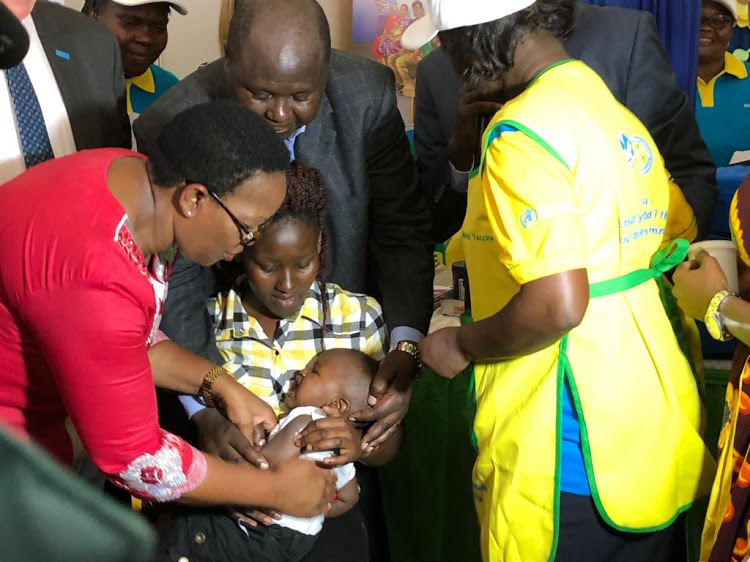
An urgent measles and rubella (MR) vaccination campaign was launched today in Kajiado County by the Government of Kenya, with support of World Health Organization, WHO, UNICEF, Gavi the Vaccine Alliance, and US Centers for Disease Control and Prevention. The campaign, which will be conducted from 26 June to 5 July, aims to vaccinate 3.9 million children aged 9 months to 5 years, in 22 counties across Kenya.

The MR campaign is now underway in the counties of: Baringo, Bomet, Bungoma, Elgeyo, Garissa, Homabay, Kakamega, Kilifi, Kisii, Kisumu, Mandera, Marakwet, Migori, Nairobi, Narok, Samburu, Tana River, Trans Nzoia, Turkana, Vihiga, Wajir and West Pokot. The target counties were selected based on high numbers of unimmunized children and reported measles outbreaks.

“The Government of Kenya has always prioritized the health of the people and that is why we are taking this urgent action to protect children from measles and rubella,” Chief Administrative Secretary for Health, Dr Mercy Mwangangi said. “Children are a blessing from God and therefore there is no reason for them to suffer and die from preventable diseases. The vaccines are available free of charge and I urge all parents to ensure their children are vaccinated in order to protect them from these diseases.”

As part of the campaign, MR vaccines will be administered to children in health facilities, with mobile teams also providing vaccination in preschools, marketplaces, churches and other designated places on specific days. UNICEF has procured and delivered the vaccines and is supporting the mobilization of caregivers and communities. Mobile company AirTel is providing support through mass text messages, to raise awareness among parents in the target counties.

“All children have the right to access life-saving health care. Last year, routine health services including immunization were disrupted by the impact of COVID-19,” said UNICEF Representative to Kenya Maniza Zaman. “UNICEF is working hard to ensure that young and vulnerable children are vaccinated against measles and rubella. Children under five-years-old can die from measles complications and if the virus circulation is not stopped, their risk of exposure increases daily. We know that vaccination is by far the best way to keep these children safe.”

Since 2016, the MR vaccine has been offered as part of the routine childhood immunization programme in Kenya, with one dose administered at nine months and the second dose at 18 months. To ensure adequate protection in communities, it is important that at least 95 per cent of children receive the two recommended doses. In 2020, only 85 percent of children in Kenya have received the first dose and less than 50 percent have had the second dose.

“This mass vaccination will provide an opportunity for all who missed their vaccines to get it and a supplemental dose for those who received their previous dose to boost their immunity,” WHO Representative to Kenya Dr Rudi Eggers said. “Vaccination against measles will protect children from this debilitating disease which is one of the leading causes of death among children less than five years old. Vaccination saves lives, protects against diseases and ensures that children are healthy and thus do well in school and later on in life." No child should suffer measles or die from measles or other vaccine preventable diseases while there is an effective vaccine that is made available by the Government of Kenya."

Globally, reported measles cases fell from over 850,000 in 2000 to 132,000 in 2016, largely due to increased vaccine coverage in low and middle-income countries. However, in recent years global cases have surged dramatically. In 2018, there were nearly 360,000 cases recorded worldwide, while measles deaths climbed 50 percent from 2016 to 2019, claiming over 207,500 lives in 2019, according to data from WHO.

About IEA Media Ltd

Informer East Africa is a UK based diaspora Newspaper. It is a unique platform connecting East Africans at home and abroad through news dissemination. It is a forum to learn together, grow together and get entertained at the same time.

To advertise events or products, get in touch by info [at] informereastafrica [dot] com or call +447957636854.
If you have an issue or a story, get in touch with the editor through editor[at] informereastafrica [dot] com or call +447886544135.

We also accept donations from our supporters. Please click on "donate". Your donations will go along way in supporting the newspaper.

Get in touch

Our Offices

London, UK
+44 7886 544135
editor (@) informereastafrica.com
Slough, UK
+44 7957 636854
info (@) informereastafrica.com

Latest News

Trump-BBC live: US president tells corporation to apologise or he will sue them for $1bn

Trump-BBC live: US p...

After Tim Davie and Deborah Turness quit and Samir Shah apologises, US leader claims broadcaster ‘tr...

Ugandan judiciary delegation visits South Africa to enhance labour court practices

Ugandan judiciary de...

Ugandan judges engage South Africa’s Labour Courts and CCMA in knowledge-sharing visit Image: File...

US strikes alleged drug-carrying vessels in Pacific, killing 6

US strikes alleged d...

A vessel burns in this still image taken from a video released Sept 15, 2025, depicting what US Pres...

Kenyan troops in DRC emerge top in Monusco sports

Kenyan troops in DRC...

By MOD The Fourth Contingent of Kenya Quick Reaction Force (KENQRF 4) has emerged top in the just-co...

For Advertisement

Big Reach

Informer East Africa is one platform for all people. It is a platform where you find so many professionals under one umbrella serving the African communities together.

Very Flexible

We exist to inform you, hear from you and connect you with what is happening around you. We do this professionally and timely as we endeavour to capture all that you should never miss. Informer East Africa is simply news for right now and the future.

Quality News

We only bring to you news that is verified, checked and follows strict journalistic guidelines and standards. We believe in 1. Objective coverage, 2. Impartiality and 3. Fair play.

Banner & Video Ads

A banner & video advertisement from our sponsors will show up every once in a while. It keeps us and our writers coffee replenished.