
Donation Amount. Min £4.99

East Africa

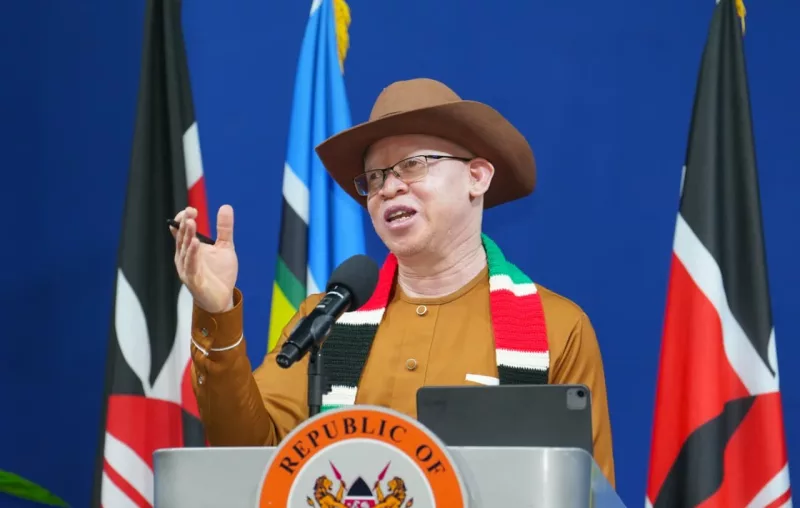
NIS boss Nordin Haji during the Mashariki Corporation Conference in Diani, Kwale county /HANDOUT

By PAUL ILADO

Expert Yanaya spoke at a gathering of intelligence leaders from 70 countries under the Mashariki Corporation conference.

Security expert Ibrahim Yanaya has told intelligence chiefs meeting in Diani, Kwale county that militant groups linked to Al Shabaab and similar movements are changing how they operate, with new pressure points that could affect countries across the region, including Kenya.

Yanaya was speaking at a gathering of intelligence leaders from 70 countries under the Mashariki Corporation conference.

He said the shift matters because extremist networks have continued to find ways to move faster than security forces, keeping defenders busy and reactive.

“In many cases, these groups decide when, where, and how to attack,” Yanaya said, explaining that this gives them an advantage.

He added that this often means security forces have to keep travelling and responding, sometimes after an incident has already begun.

His warning comes against the background of Al Shabaab’s continued influence beyond Somalia.

The group has been linked to attacks and plots that have affected Kenya and other countries in the region.

In Kenya, that impact has been felt through security operations and measures taken in response to incidents along major routes, as authorities work to prevent attacks on civilians and disrupt movement linked to extremist activity.

Across the wider region, Al Shabaab-linked violence has also been associated with attempts to destabilise communities and strain government resources.

Yanaya cautioned that the current threat is not only about isolated attacks. He said militant groups are making changes that can alter the conflict picture, including how they pressure states and communities.

He highlighted three ways the strategy is shifting. First, he said there is increased focus on urban and trading areas.

For many years, violence was often described as being concentrated in remote areas and far porous border zones in northern Kenya.

But Yanaya said militants are now paying more attention to towns, cities, bridges, and highways, where population density and movement can increase disruption and reach.

Second, he said militants are using economic pressure as part of their approach.

Instead of relying only on direct attacks, he said they can impose blockades and interfere with road corridors and local livelihoods.

According to Yanaya, this approach makes everyday life harder for communities and can weaken local stability, which militants can then exploit.

Third, Yanaya said militants are becoming more political. He told the chiefs that some groups are reaching out to political actors—especially opposition figures who may be outside the country—and trying to co-opt them into alliances.

While he stressed that governments still control most cities, he said the political dimension makes the security environment more complicated.

For Kenya, Yanaya said the concern is how these changes could play out along key corridors and in towns where security forces must balance multiple responsibilities.

He argued that the most serious scenario would be militants finding ways to target cities as key points of leverage.

He also said regional states cannot handle the threat alone, noting that cooperation is needed through mechanisms like the African Union, along with continued intelligence sharing and coordination with neighbours and international partners. The Star


About IEA Media Ltd

Informer East Africa is a UK based diaspora Newspaper. It is a unique platform connecting East Africans at home and abroad through news dissemination. It is a forum to learn together, grow together and get entertained at the same time.

To advertise events or products, get in touch by info [at] informereastafrica [dot] com or call +447957636854.
If you have an issue or a story, get in touch with the editor through editor[at] informereastafrica [dot] com or call +447886544135.

We also accept donations from our supporters. Please click on "donate". Your donations will go along way in supporting the newspaper.

Get in touch

Our Offices

London, UK
+44 7886 544135
editor (@) informereastafrica.com
Slough, UK
+44 7957 636854
info (@) informereastafrica.com

Latest News

AUC Deputy Chairperson received Rt. Hon. Robinah Nabbanja, Prime Minister of Uganda

AUC Deputy Chairpers...

H.E. Ambassador Selma Malika Haddadi, @DCP_Haddadi Deputy Chairperson of the African Union Commissio...

US indicts Kenyan in Sh7.5bn arms deal linked to Mexican cartel

US indicts Kenyan in...

By PERPETUA ETYANG, The Star Elisha Odhiambo Asumo is among four foreign nationals accused of consp...

Forensic evidence, survivor testimony link Mackenzie to Kwa Binzaro deaths

Forensic evidence, s...

Controversial preacher Paul Mackenzieand his co-accused persons appear before the Mombasa High Court...

Pretoria disrupted by anti-immigrant march

Pretoria disrupted b...

By Warren Mabona. Photos by Ihsaan Haffejee. /GroundUp Marchers wave shields and sticks as they make...

For Advertisement

Big Reach

Informer East Africa is one platform for all people. It is a platform where you find so many professionals under one umbrella serving the African communities together.

Very Flexible

We exist to inform you, hear from you and connect you with what is happening around you. We do this professionally and timely as we endeavour to capture all that you should never miss. Informer East Africa is simply news for right now and the future.

Quality News

We only bring to you news that is verified, checked and follows strict journalistic guidelines and standards. We believe in 1. Objective coverage, 2. Impartiality and 3. Fair play.

Banner & Video Ads

A banner & video advertisement from our sponsors will show up every once in a while. It keeps us and our writers coffee replenished.