Donation Amount. Min £2

Health

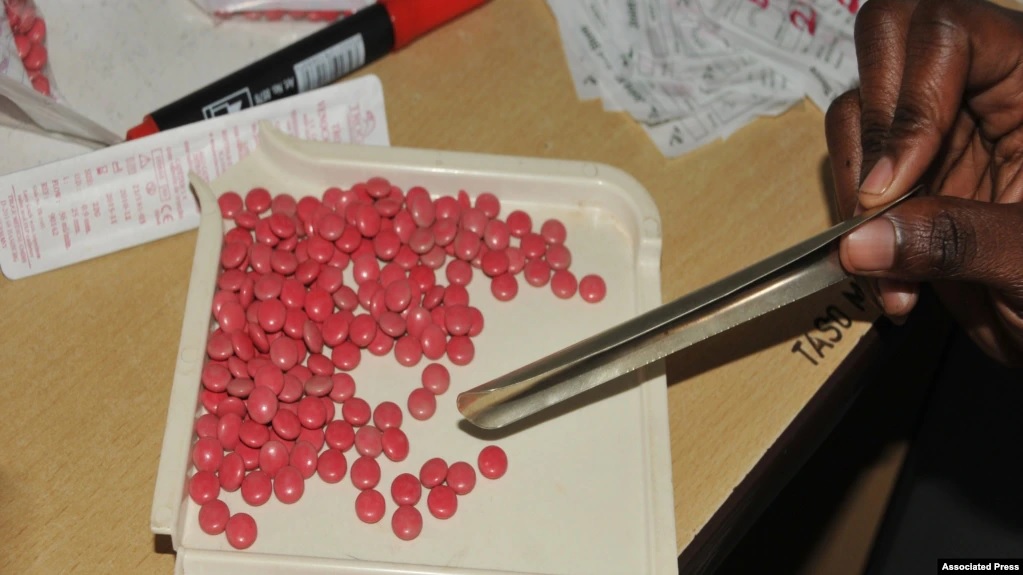
A health worker counts antiretroviral drug tablets for a patient at The AIDS Support Organization (TASO) in the capital Kampala, Uganda, July 12, 2012. Photo AP


Uganda has kickstarted a trial for the injectable HIV drugs cabotegravir and rilpivirine. Researchers and those living with HIV say the trial will likely end pill fatigue, fight stigma, improve adherence and ensure patients get the right dosage.

The two drugs have been in use as tablets. The World Health Organization last year licensed their use as injectables.

While the two injectables already went through trials in Europe and North America, this will be the first time they are tested in an African population for efficacy and safety in an African health care system.

Uganda is one of three African countries, along with Kenya and South Africa, which got approval from the WHO to carry out the trials. However, Kenya and South Africa have yet to acquire approvals to start their trials, expected by the end of the year.

Uganda and Kenya will both have three trial sites and there will be two in South Africa, with a total of 512 participants -- 202 from Uganda, 160 from Kenya and 150 from South Africa.

Dr. Ivan Mambule, the lead project researcher at the Joint Clinical Research Center, says participants will need one injection every two months.

“We are going to choose participants who are already on ART [anti-retroviral treatment] and are stable on ART. And we will randomize them to either continue on their normal treatment, which is the pill that they’ve been taking, or to switch them to this injectable. The injection is on the buttock,” he expressed.

Uganda has 1.4 million people living with HIV/AIDS. Barbara Kemigisa who is living with HIV and founded the Pill Power Foundation working with rural women, says the injectable drugs will increase adherence to treatment and ensure people get the right dosage.

“One of the things that affects adherence is the fact that people have to hide medicine. In the village, people are hiding medicine in the kitchen roof, in trees, in bushes, in a baby’s shoe…If someone is wrapping the medicine in like five plastic bags and digs a hole in the garden and keeps the medicine there, by the time someone is taking that medicine, it’s no longer medicine, it's poison,” Kemigisa points out.

Nicholas Niwagaba, who has worked with young people living with HIV welcomes the trial, saying it will reduce the pill burden and fight stigma.

“Young people feel like, this is a lot of pills to take. Those who are on the first line, they will have to take one tablet a day. There are those who are on second line and they have to take more than one pill and they have to take it in the morning and in the evening. And of course, this requires you to have actually a balanced diet which is really a challenge for most of young people especially those from vulnerable communities,” he says.

According to the WHO, there are 25.7 million people living with HIV in Africa. With only the pill currently available to manage the scourge, this injectable may come as a relief for people living with HIV/AIDS. - Halima Athumani, Voice of America

Burundi's Minister of Health Dr Thaddee Ndikumana, centre, Minister of Interior Gervais Ndirakobuca, right, and China's ambassador to Burundi Zhao Jiangping, left, mark the arrival of the first Covid-19 vaccines to the country. Photo Berthier Mugiraneza /AP


Burundi has started to roll out its first Covid-19 jabs, leaving just Eritrea and North Korea as the only countries on Earth not to begin a vaccination drive.

The news comes after a year and a half of tentative coronavirus policies in the East Africa nation of 11.5m people.

The East African nation recently received half a million Sinopharm doses from China as a donation. The vaccination campaign started on Monday in the commercial capital of Bujumbura. 

No government officials were reportedly present at the opening, and dozens of people queued quietly at a vaccination site, saying they heard about the drive only through word of mouth.

“I rushed to take the vaccine because I have a trip very soon and, of course, I also want to protect myself,” 30-year-old Blaise told Reuters. “People's fears are groundless. I am reassured by the fact that I was with a doctor when I got it.”

Pierre Nkurunziza, Burundi's former strongman president, downplayed the severity of the virus at the beginning of the pandemic and did not take significant measures to curb its spread. 

In June 2020, The Telegraph quoted opposition sources saying that Mr Nkurunziza may have become the world's first leader to die of the disease. 

The news comes as confirmed cases across sub-Saharan Africa fall to their lowest rate since the beginning stages of the pandemic.

On October 18, Africa recorded its lowest level of new cases – just 1,844 cases – since March 16, 2020, according to the World Health Organization (WHO).

Earlier this week, Kenya reported a positivity rate of 0.9 per cent, with only 33 people testing positive for the virus. South Africa reported that its rate has dropped to 1.4 per cent, with only 210 new cases on Monday. These are some of the lowest rates since the pandemic began. 

These testing figures only show a warped version of reality, however. Last week, the WHO's Africa Director, Dr Matshidiso Moeti, said that an estimated six out of seven coronavirus cases go undetected in the region. 

Dr Moeti said that while some eight million cases of coronavirus had been detected in Africa since the beginning of the pandemic, more than 50 million cases are estimated to have gone undetected.

Despite the fall in cases, however, the vaccine rollout remains slow across the continent. Less than five per cent of Africans are full vaccinated, according to Africa Union (AU) data, compared with more than 60 per cent in the European Union.

This shortfall is primarily due to supply issues. Most African countries have been highly effective at distributing Covid-19 shots. Africa had used more than 70 per cent of the vaccines it had received, according to the UN. - , The Telegraph


(Bloomberg) -- Burundi received 500,000 doses of Sinopharm Covid-19 vaccines on Thursday, in a Chinese donation valued at $3 million, according to Health Minister Thaddée Ndikumana.

“We have received these doses from the Chinese government as a grant,” he said. More vaccines from Belgium, France, and the U.S. are expected, Ndikumana said, without giving more details.

Burundi has registered 19,513 Covid-19 cases and 14 deaths, according to the World Health Organization. - Desire Nimubona, Bloomberg News


About IEA Media Ltd

Informer East Africa is a UK based diaspora Newspaper. It is a unique platform connecting East Africans at home and abroad through news dissemination. It is a forum to learn together, grow together and get entertained at the same time.

To advertise events or products, get in touch by info [at] informereastafrica [dot] com or call +447957636854.
If you have an issue or a story, get in touch with the editor through editor[at] informereastafrica [dot] com or call +447886544135.

We also accept donations from our supporters. Please click on "donate". Your donations will go along way in supporting the newspaper.

Get in touch

Our Offices

London, UK
+44 7886 544135
editor (@) informereastafrica.com
Slough, UK
+44 7957 636854
info (@) informereastafrica.com

Latest News

Five Dead After Helicopter Crash at Mount Kilimanjaro’s Barafu Camp

Five Dead After Heli...

The helicopter, on a medical evacuation mission, crashed on Tuesday at the high-altitude camp, which...

Pastor Kanyari's children Sky, Danny overjoyed as they arrive in UK to visit mum's friend

Pastor Kanyari'...

Betty Bayo's best friend, Shiru Stuart, is hosting the singer's children in her house in the UK. Pho...

UK accused of breaking key aid promise as cuts drive humanitarian crisis in South Sudan

UK accused of breaki...

The Renk transit centre in South Sudan shelters hundreds of thousands of people fleeing the conflic...

UN General Assembly resolution reaffirming legal framework of question of Western Sahara as decolonization issue

UN General Assembly...

 The United Nations, in its official languages, issued UN General Assembly resolution 80/89, which i...

For Advertisement

Big Reach

Informer East Africa is one platform for all people. It is a platform where you find so many professionals under one umbrella serving the African communities together.

Very Flexible

We exist to inform you, hear from you and connect you with what is happening around you. We do this professionally and timely as we endeavour to capture all that you should never miss. Informer East Africa is simply news for right now and the future.

Quality News

We only bring to you news that is verified, checked and follows strict journalistic guidelines and standards. We believe in 1. Objective coverage, 2. Impartiality and 3. Fair play.

Banner & Video Ads

A banner & video advertisement from our sponsors will show up every once in a while. It keeps us and our writers coffee replenished.