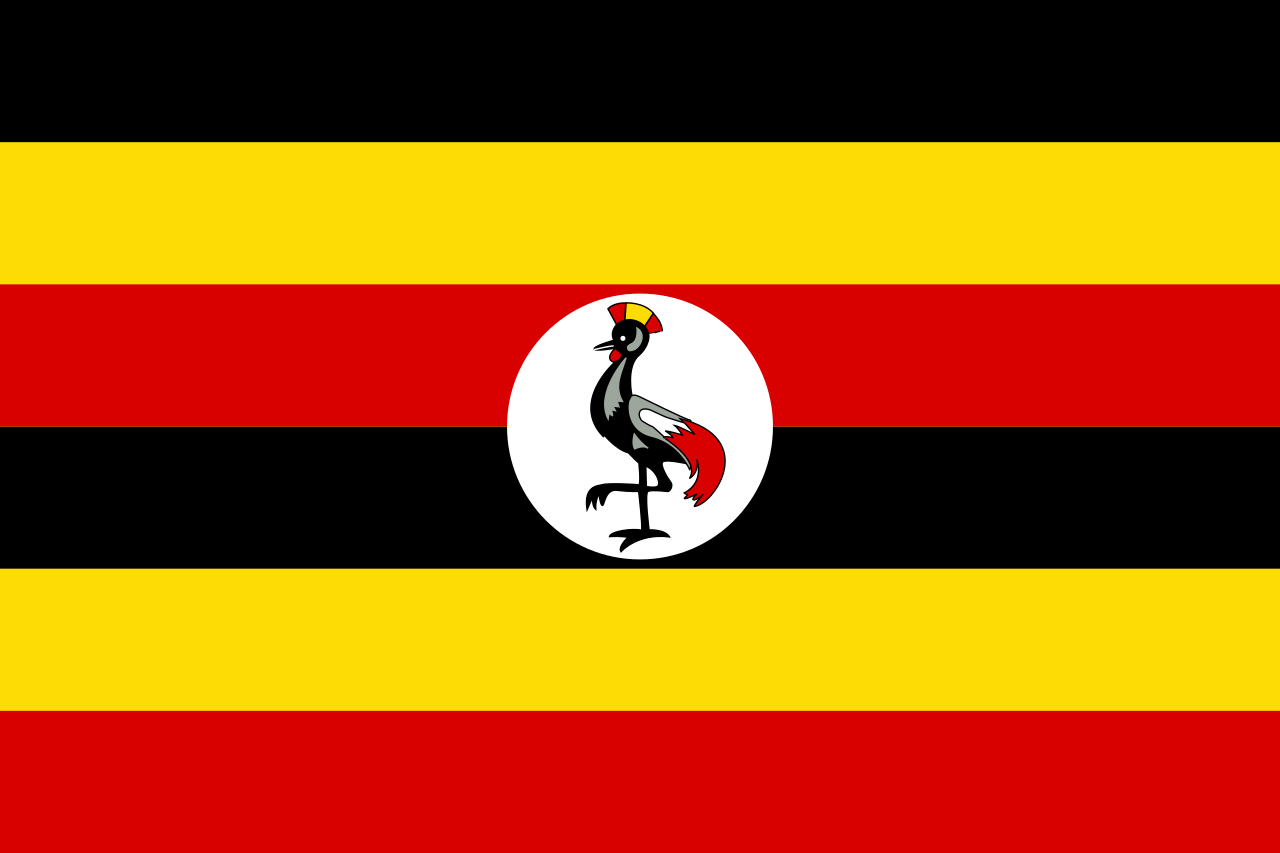
People in Uganda queued up outside vaccination centers in the capital Kampala on Wednesday, a day after the country confirmed its first cases of the omicron variant of COVID-19.
The virus was detected in seven travellers from South Africa and Nigeria who arrived at Entebbe International Airport on November 29 and are currently in isolation.
Those affected were said to display only mild symptoms.
The arrival of the new variant has driven some previously vaccine-hesitant Ugandans to get a jab.
At the Kampala Capital City Authority mass vaccination site, several first-timers reported for their first jab fearing the country could return to the scenes witnessed during the second wave of the pandemic.
Around 7.6 million doses have been administered in Uganda since the rollout began in early 2021.
The confirmation of omicron cases in Uganda means the new variant has been found in at least nine African countries.
South Africa remains the epicenter of the omicron outbreak, with experts saying that the overwhelming majority of its thousands of new cases per day are of the new variant. - Africanews with AFP
Sky News host Peta Credlin apologised for the second time in 18 months to Victoria’s South Sudanese community. Photo SKY NEWS
Sky News host Peta Credlin has issued a lengthy on-air apology to Victoria’s South Sudanese community after anger about a program in which she falsely blamed them for a Melbourne COVID-19 outbreak last year.
The former government advisor issued the four-minute apology last Friday night, describing her previous comments as “factually wrong,” error-strewn and apologising for the hurt and offence she caused.
It’s the second time Credlin has apologised to Victoria’s South Sudanese community since she made the comments last year.
“In June last year, while commenting on the COVID-19 pandemic, the escalation of new infections in Victoria, and various public health measures, I incorrectly linked the South Sudanese community to a cluster of cases that had developed following an end-of-Ramadan dinner in Melbourne’s northern suburbs,” Credlin told viewers. “This was factually wrong, and I again deeply regret the error. On the basis of that error, I made various other statements that I accept have caused genuine hurt and offence to South Sudanese community members. It was not my intention.”
Credlin also clarified the South Sudanese community was not involved with the end-of-Ramadan cluster. “More than 93 per cent of South Sudanese born members of the community are Christian, not Muslim,” she said.
“The South Sudanese community were not making excuses and to the best of their ability members of the community were educating each other, maintaining social distancing, changing their cultural practices and doing what was required,” she said.
“My statements were understood to mean that the South Sudanese community had been reckless, irresponsible, or even deliberate, in breaching social distancing requirements, that the community had failed to adapt its cultural practices like other Australians, and that this was putting Australians at risk. I do not believe there was any truth to those inferences,” Credlin said.
Credlin’s first apology came three days after the offending program went to air, but it was criticised by the Society of South Sudanese Professionals as a “serious assault” on the community. The second apology was prompted by different concerns raised after meeting with the South Sudanese community. Credlin said on Friday the first apology was “too limited” and had caused further offence.
Sky News will run stories in coming months to highlight the positive contributions South Sudanese Victorians make to the broader community, she said.
Credlin apologised on air to former Prime Minister Kevin Rudd in February for saying his petition calling for a royal commission into the Murdoch media was a “data harvesting exercise”. The apology was part of a confidential defamation settlement.
An Australian News Channel spokesperson said the apology was made following an agreement with the South Sudanese community.
“Australian News Channel and Peta Credlin issued an apology over remarks concerning the South Sudanese community in June 2020 soon after the segment went to air,” a spokesperson said.
“Following a separate and more recent complaint over the same broadcast, Sky News and Peta Credlin engaged in extensive consultation with other South Sudanese community members. Peta Credlin made a further apology on last Friday’s episode of Credlin as soon as agreement was reached.” - Zoe Samios, WAtoday
Kigali International Airport. Rwanda will effective Sunday, November 28, 2021 reinstate the mandatory 24-hour quarantine for all arriving passengers as officials move to control potential entry and spread of the new deadly Covid-19 variant detected in Southern Africa. Photo CYRIL NDEGEYA/Nation Media Group
Rwanda will effective Sunday, November 28, reinstate the mandatory 24-hour quarantine for all arriving passengers as officials move to control potential entry and spread of the new deadly Covid-19 variant detected in Southern Africa.
The health ministry announced Friday that the government would soon issue additional measures in a bid “to limit the spread of the new variant and protect gains made so far in managing the Covid-19 pandemic and reopening the economy.”
“The health ministry is reinstating the obligatory 24-hour quarantine in designated hotels at own expense for all persons arriving into Rwanda effective Sunday, November 28 , 2021 at noon,” reads the statement in part. It further calls on members of the public, including vaccinated people to strictly observe Covid-19 preventive measures.
Months of the Covid-19 lull that enabled lifting of almost all restrictions on movement, gatherings and near full reopening of economic activities had seen fully vaccinated travellers no longer required to quarantine at hotels on arrival in Rwanda.
A PCR test for all arriving passengers was, however, required.
Arriving and departing passengers at Kigali International airport equally present a negative PCR test taken with 72 hours prior to departure.
With over 3.1 million people fully vaccinated and 5.9 million people jabbed with the first shot as at Friday, November 26, the number of people who got the full doses of Covid-19 vaccine represent 21 percent.
Rwandan government recently extended the mass vaccination campaign to teens under eighteen years in a bid to further accelerate the uptake of the jab.
The country has not detected any case of the new variant to date but officials remain on high alert. The national carrier RwandAir flies to South Africa which is among the countries where the variant was first detected.
Rwanda recorded eight new Covid-19 cases Friday out of 12,065 tests conducted. More than 115 new cases were confirmed in 84,028 tests taken over the last seven days with the positivity rate remaining below one per cent. The country recorded only two Covid-19 linked deaths over the past week.
Health minister Daniel Ngamije said existing diagnostic capacity using PCR testing was up to task to detect the new Covid-19 variant, therefore won’t require infrastructure upgrades. - JOHNSON KANAMUGIRE, The EastAfrican
Page 27 of 56
About IEA Media Ltd
Informer East Africa is a UK based diaspora Newspaper. It is a unique platform connecting East Africans at home and abroad through news dissemination. It is a forum to learn together, grow together and get entertained at the same time.
To advertise events or products, get in touch by info [at] informereastafrica [dot] com or call +447957636854. If you have an issue or a story, get in touch with the editor through editor[at] informereastafrica [dot] com or call +447886544135.
We also accept donations from our supporters. Please click on "donate". Your donations will go along way in supporting the newspaper.