Donation Amount. Min £2

Health

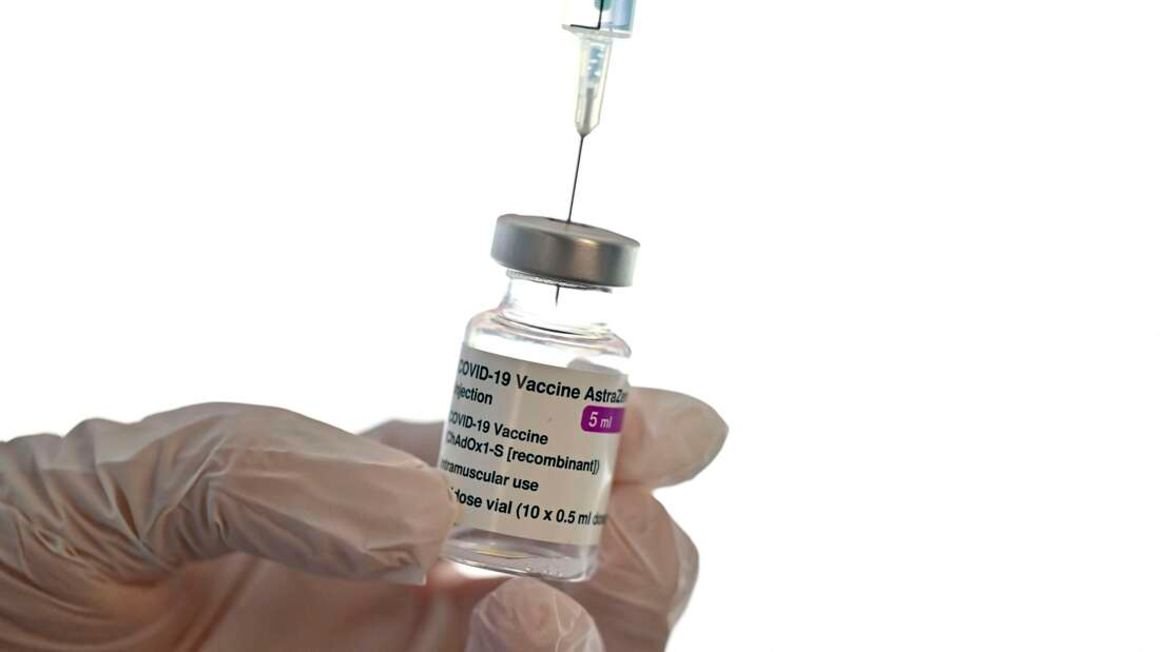
A health worker prepares a dose of the AstraZeneca/Oxford vaccine at a coronavirus vaccination centre at the Wizink Center in Madrid on May 12, 2021. Photo AFP


Kenya is set to receive a consignment of 72,000 AstraZeneca/OXford vaccine doses that South Sudan returned to the Covax facility. 

South Sudan says it will return the doses after concluding it cannot administer the jabs before they expire, a health ministry official told AFP on Tuesday.

The country received 132,000 doses of the vaccine in late March from Covax, the global initiative to ensure lower-income countries receive jabs, but so far has administered less than 8,000 shots.

On Tuesday, Kenya’s vaccine taskforce chair, Dr Willis Akhwale, told the Nation that the doses are expected by Thursday.

“I finished doing the paper work this evening ... everything is set. The batch of 72,000 AstraZeneca doses will be here tomorrow or by Thursday,” he said, but noted that Unicef is the one to determine when they will be delivered.

The announcement comes a week after Kenya's Health Cabinet Secretary Mutahi Kagwe announced that the country had only 100,000 doses of the vaccine left.

CS Kagwe said it was crunch time but asked Kenyans yet to receive their second shots not to panic, saying the first dose offers up to 70 per cent protection.

“We are better off with a first dose than with none. We have not heard of people dying because they did not get the second dose,” he said.

Timelines for getting the second vaccine dose are uncertain due to a shortage occasioned by delays by Covax.

Several challenges

In March, South Sudan received 132,000 doses from Covax but the country’s national taskforce on Covid-19 decided to return before they expire after discussing the matter with the World Health Organization (WHO). 

“We are struggling economically … that’s why we have problems funding the deployment itself. We are actually tightening our belts … that’s why hopefully, in the next two weeks, the 60,000 we have will be dispersed all over the country,” said South Sudan’s Health Ministry undersecretary, Dr Mayen Machuot said in a previous interview. 

“We don’t want to run the risk of [the vaccine] expiring in our hands. It will be accounted for, so we are committing [to return] 72,000 doses so that they are used by [countries that] can deploy them in one week,” Dr Machuot told reporters at a Juba news conference.

He added that South Sudan failed to use its doses because of a slow initial uptake by health workers, delays by Parliament to approve the vaccine’s use, and a lengthy training of people to administer the vaccine.

The Covax facility wrote back to the South Sudanese government, saying it was happy with the arrangement as the doses would not go to waste.

Remaining doses

South Sudan will be left with 52,000 doses that it hopes to use before the expiration date on July 18.

Once that batch is finished, it will request additional doses from Covax, the ministry said.

As in other parts of Africa, a fear of side effects and rumours the vaccine causes impotence or is otherwise unsafe have spurred wariness about vaccines among the population.

Last month, South Sudan was considering disposing 60,000 expired vaccines it received as a donation through the African telecommunications company MTN and the African Union.

To date, South Sudan has recorded 10,686 cases of Covid-19 and 115 deaths.

China and India's efforts

Meanwhile, India and China are stepping up efforts to help other countries with vaccination.

The Chinese government says Beijing is stepping up support for Africa’s post-pandemic recovery, with initial focus on vaccine access, as a “public good”.

And last week, the Indian government, which is battling a Covid-19 crisis that has seen it suffer shortages of treatment supplies, said it was pooling resources to produce more vaccines of different types.

The country authorised more local firms to take foreign orders and deals to produce Covishield (known abroad as AstraZeneca vaccine), Covaxin (India’s first indigenous Covid-19 vaccine) and Sputnik V, the Russian vaccine; all of which have been authorised for emergency use by the WHO.

The decision, officials said, was a result of soaring infections and inadequate vaccine production by the two main private manufacturers, the Serum Institute of India (SII), which makes AstraZeneca's vaccine, and Bharat Biotech, that makes Covaxin.

Dr Randeep Guleria, an Indian pulmonologist and the current director of the All India Institute of Medical Sciences (AIIMS), told the media that Sputnik V manufacturers had joined efforts with a number of Indian companies in the country to ramp up production of their product.

“New plants [are] being set up by Bharat Biotech and SII by July-August. We will a have large number of doses available in about two months, we will get vaccines from outside too” the director said. - Leon Lidigu, AFP/The EastAfrican


NAIROBI, May 26 (Xinhua) -- Kenya's Ministry of Health said Wednesday it has developed targeted interventions to reduce the burden of non-communicable diseases that are linked to a higher toll of COVID-19 fatalities.

"We have come up with interim guidelines to prevent and manage non-communicable diseases in the light of the pandemic," Cabinet Secretary for Health Mutahi Kagwe told a virtual forum on the nexus between lifestyle diseases and COVID-19 held in Nairobi.

The government has put robust measures in place to facilitate the seamless provision of care to patients with chronic diseases and shield them from the risk of contracting and succumbing to coronavirus, he said.

It has implemented interventions including adequate funding, training of health workers, public awareness and timely diagnosis to strengthen the response to non-communicable diseases like diabetes and hypertension, Kagwe said.

Ministry of Health data show that non-communicable diseases account for 50 percent of hospital admissions and 42 percent of deaths in Kenya.

Kagwe said that urbanization, environmental pollution, and sedentary lifestyles have escalated the non-communicable disease crisis in Kenya amid strain on household budgets and public health infrastructure.

Ephantus Maree, head of the Non-communicable Diseases Unit in the Ministry of Health, said chronic ailments have accounted for about 43 percent of COVID deaths since the onset of the pandemic in March last year.

Investments in research, surveillance, and screening at the community level are key to reducing the burden of non-communicable diseases in Kenya, he said. - Xinhua

Health Cabinet Secretary Mutahi Kagwe. Photo Ministry of Health, Kenya


The Ministry of Health on Sunday announced that 324 more people in Kenya had tested positive for Covid-19, following the analysis of 4,392 samples in the last 24 hours.

This placed the country's positivity rate at 7.4 percent and the number of confirmed infections at 168,432.

Of the new patients, 298 were Kenyans and 26 foreigners, 223 male and 101 female, the youngest one year old and the oldest 91 years.

Kiambu County accounted for 84 of the new cases and was followed by Nairobi with 68, Homa Bay 28, Mombasa 27, Kisii 19, Nyeri 17, Kilifi 13, Isiolo and Meru seven each, and Kisumu and Uasin Gishu six each.

Health Cabinet Secretary Mutahi Kagwe, in a statement to newsrooms, further reported 10 more deaths, raising the toll to 3,059.

Two of the deaths occurred in the last 24 hours while eight were confirmed after the audit of facility records over the last one month.

CS Kagwe also announced that 85 more people recovered from the disease, 53 of them under home-based isolation and care and 32 in hospital.

The total number of recoveries rose to 114,537, he said, adding that as of Sunday, 1,084 patients had been hospitalised at facilities countrywide while 4,751 were being treated at home.

Of those in hospital, 121 were in intensive care units (ICU), 25 of whom are on ventilator support, 68 on supplemental oxygen and 28 patients under observation. - CGTN (With input from Ministry of Health Kenya)

About IEA Media Ltd

Informer East Africa is a UK based diaspora Newspaper. It is a unique platform connecting East Africans at home and abroad through news dissemination. It is a forum to learn together, grow together and get entertained at the same time.

To advertise events or products, get in touch by info [at] informereastafrica [dot] com or call +447957636854.
If you have an issue or a story, get in touch with the editor through editor[at] informereastafrica [dot] com or call +447886544135.

We also accept donations from our supporters. Please click on "donate". Your donations will go along way in supporting the newspaper.

Get in touch

Our Offices

London, UK
+44 7886 544135
editor (@) informereastafrica.com
Slough, UK
+44 7957 636854
info (@) informereastafrica.com

Latest News

UK accused of breaking key aid promise as cuts drive humanitarian crisis in South Sudan

UK accused of breaki...

The Renk transit centre in South Sudan shelters hundreds of thousands of people fleeing the conflic...

UN General Assembly resolution reaffirming legal framework of question of Western Sahara as decolonization issue

UN General Assembly...

 The United Nations, in its official languages, issued UN General Assembly resolution 80/89, which i...

Rescue helicopter crash on Tanzania's Mount Kilimanjaro kills five

Rescue helicopter cr...

A medical evacuation helicopter has crashed on Mount Kilimanjaro, killing all five people on board,...

IG Douglas Kanja Leads Road Safety Assessment on Christmas day

IG Douglas Kanja Lea...

The assessment covered Nairobi-Nakuru Highway, Nairobi-Nanyuki Highway, and Nairobi-Mombasa Highway,...

For Advertisement

Big Reach

Informer East Africa is one platform for all people. It is a platform where you find so many professionals under one umbrella serving the African communities together.

Very Flexible

We exist to inform you, hear from you and connect you with what is happening around you. We do this professionally and timely as we endeavour to capture all that you should never miss. Informer East Africa is simply news for right now and the future.

Quality News

We only bring to you news that is verified, checked and follows strict journalistic guidelines and standards. We believe in 1. Objective coverage, 2. Impartiality and 3. Fair play.

Banner & Video Ads

A banner & video advertisement from our sponsors will show up every once in a while. It keeps us and our writers coffee replenished.