
Leaders have engaged in partnerships that merge historical rivalries with pragmatic cooperation
In Summary
- One of the most notable developments has been the formation of a working relationship between President William Ruto and opposition veteran the late Raila Odinga.
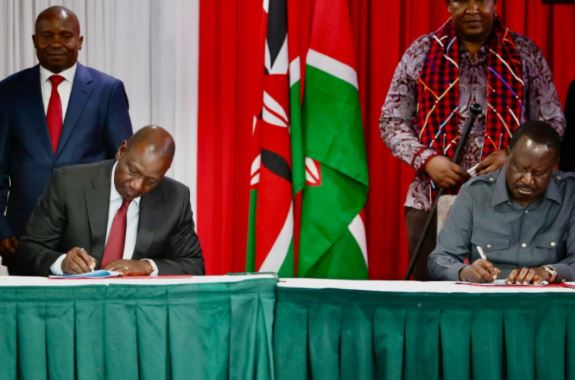
- The Ruto-Odinga accord, formalised in March at Nairobi’s Kenyatta International Convention Centre, brought together the United Democratic Alliance (UDA) and the Orange Democratic Movement (ODM) under a memorandum of understanding described as a “broad-based government.”
Kenya’s political landscape in 2025 has been shaped by a series of strategic alliances that have influenced the nation’s power dynamics.
As the country looks toward the 2027 general elections, political leaders have engaged in partnerships that merge historical rivalries with pragmatic cooperation.
One of the most notable developments has been the formation of a working relationship between President William Ruto and opposition veteran the late Raila Odinga, signalling a potential shift from historically confrontational politics.
The Ruto-Odinga accord, formalised in March at Nairobi’s Kenyatta International Convention Centre, brought together the United Democratic Alliance (UDA) and the Orange Democratic Movement (ODM) under a memorandum of understanding described as a “broad-based government.”
The agreement establishes a framework for dialogue, joint oversight on national issues, and conflict resolution between Kenya’s two largest political parties.
Analysts note that while it does not constitute a full coalition or party merger, it introduces a consultative network spanning the executive, opposition, and key government institutions.
Ruto’s engagement with Odinga followed a series of political challenges affecting his administration. In 2024, proposals for new taxes prompted nationwide protests, including among youth groups.
Human rights organisations reported fatalities during the unrest, highlighting public dissatisfaction with government policies
The Ruto-Odinga pact has been interpreted as a move to stabilise governance, enhance inclusivity, and foster national unity ahead of the next elections.
The broad-based government framework outlines cooperation across several sectors, including national security, economic recovery, healthcare, and education.
Both parties have committed to joint development initiatives, social cohesion programmes, and anti-corruption measures, acknowledging that prolonged political confrontations have affected national growth.
The agreement also establishes formal channels for mediation aimed at reducing election-related disputes and political brinkmanship.
Ruto has highlighted the benefits of the broad-based government model. During a tour of development projects in the Mt. Kenya region in April, he emphasised that unity of purpose could unlock Kenya’s potential, assuring residents that no community or region would be marginalised.
While the Ruto-Odinga partnership attracted national attention, other political realignments have also influenced the opposition landscape.
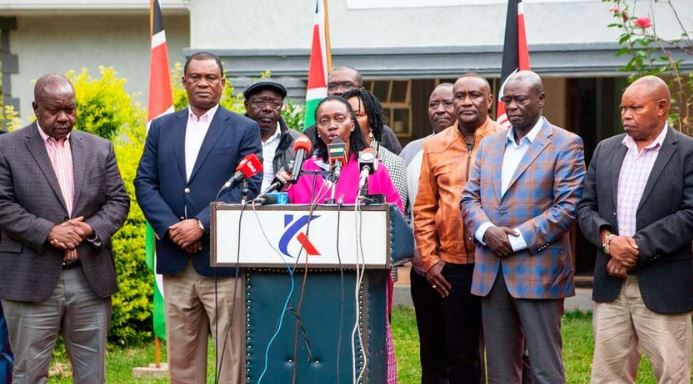
Former Interior Cabinet Secretary Fred Matiang’i aligned with opposition figures, including Rigathi Gachagua, Kalonzo Musyoka, and Martha Karua, forming the United Opposition coalition. Analysts suggest Matiang’i’s participation could influence regions with historically fluid political loyalties.
The coalition aims to consolidate votes, harmonise campaign strategies, and present an alternative to the ruling Kenya Kwanza Alliance.
At a joint press briefing, coalition leaders emphasised that their unity is based on shared concerns about governance, rising living costs, and perceived exclusion of ordinary citizens from policymaking.
They pledged to prioritise a common national agenda, maintain disciplined mobilisation, and engage consistently with grassroots supporters.
Historically, Kenyan opposition politics have been fragmented, often undermining electoral effectiveness.
The United Opposition’s commitment to cohesion represents an effort to counter the advantages of incumbency through combined networks, resources, and public support.
Analysts note that challenges remain, including managing competing ambitions and appealing across Kenya’s diverse electoral base, but the coalition’s unified approach could influence the 2027 elections.
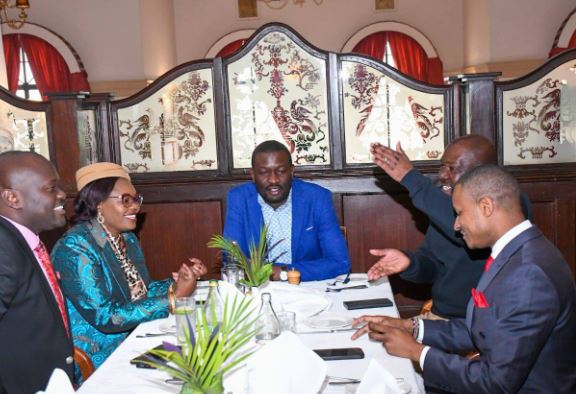
A new generation of assertive lawmakers has emerged under the Kenya Moja movement, reflecting growing youth-driven political influence. Comprised of Members of Parliament and a senator, Kenya Moja aims to amplify young leaders’ voices and influence policy debates. Prominent members include Babu Owino (Embakasi East), Ndindi Nyoro (Kiharu), Mohamed Ali (Nyali), Anthony Kibagendi (Kitutu Chache South), Caleb Amisi (Saboti), and Nairobi Senator Edwin Sifuna.
Kenya Moja seeks to influence policy, scrutinise government initiatives, and advocate for youth empowerment. While not a political party, its collaborative model, media presence, and grassroots engagement make it a closely watched entity as coalition politics intensify ahead of 2027.
Another significant alliance is the pact between Ruto and Gideon Moi, leader of the Kenya African National Union (KANU), which strengthens support in a region historically pivotal to national elections. The arrangement involves coordinated voter mobilisation, campaign strategy, and policy support. Analysts observe that this underscores Ruto’s strategy of broad coalition-building in electorally influential areas.
Earlier this year, Ruto visited former President Uhuru Kenyatta at his Kiambu residence. Officially a private consultation, the meeting was interpreted by political commentators as part of ongoing alliance-building or conflict resolution within Kenya Kwanza and the broader Rift Valley–Central Kenya corridor.
Meanwhile, the United Opposition has intensified efforts to present itself as a coherent alternative, emphasising grassroots engagement, voter education, and policy communication. By showcasing unity, the opposition seeks to leverage collective influence in regions that have historically alternated between ruling and opposition parties.
Kenya’s 2025 political landscape reflects broader trends: alliances are increasingly transactional, fluid, and strategically calculated. The Ruto-Odinga pact demonstrates that former rivals can collaborate when national or electoral imperatives demand it.
The United Opposition’s cohesion and Kenya Moja’s activism highlight the diversity of strategies leaders employ to consolidate power, influence policy, and position themselves ahead of the general elections.
Ethnic and regional considerations continue to influence alliance formation. The Ruto-Moi collaboration consolidates the Rift Valley vote, while the broad-based government seeks to include Raila-aligned constituencies, particularly in Nyanza and parts of the coastal region. Kenya Moja, by contrast, transcends traditional ethnic divisions, appealing to urban and youthful voters. These overlapping alliances illustrate the interplay of ethnicity, geography, generational politics, and policy priorities shaping Kenya’s electoral calculus.
The formation of these alliances has sparked public debate. Supporters argue that cooperative politics fosters stability, inclusive development, and pragmatic governance. Critics contend such arrangements risk blurring accountability, consolidating elite power, and creating patronage networks. Nonetheless, strategic collaboration has become central to navigating Kenya’s competitive political environment.
Cross-party collaboration is increasingly shaping legislative processes, influencing parliamentary debates, policy formulation, budget allocations, and oversight functions. Institutionalised dialogue and cooperation may have long-term implications beyond the immediate electoral cycle.
As Kenya approaches the 2027 elections, alliances formed in 2025 will likely serve as indicators of broader electoral strategies.
The Ruto-Odinga partnership, United Opposition cohesion, Kenya Moja activism, and regional alliances such as Ruto-Moi collectively illustrate a political environment where power is negotiated through collaboration as much as competition.
Observers note that while these alliances offer the promise of stability and coordinated governance, electoral outcomes will depend on their ability to maintain unity, respond to public sentiment, and navigate Kenya’s complex ethnic and regional dynamics. By Allan Kisia, The Star